


-
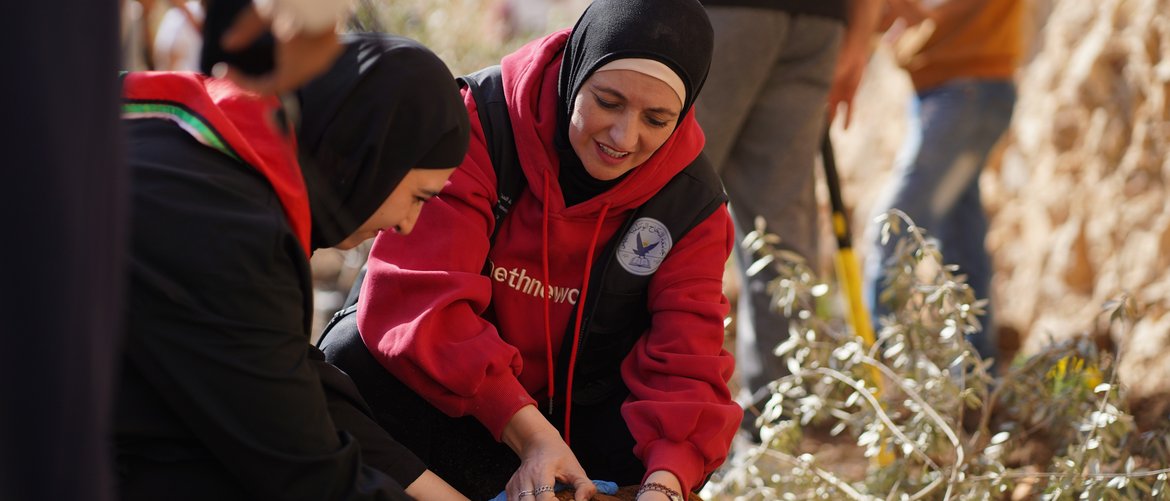
The center plants three thousand trees and supports their survival with irrigation networks
-
Students of the Community Service course plant 313 trees in their home gardens
-
The center plants 80 forest saplings behind the university hospital
-
The center provides two schools with drip irrigation systems
-
Completion of the environmental program at Ibn Sina School in Nablu
-
Completion of the Agricultural and Environmental Campaign at Ibn Sina School in Nablus
-
Planting 35 Cypress Trees to Promote a Green Environment at Sheikh Mohammed Tuffaha School
- The C S C completes afforestation work in 35 schools in Nablus Governorate
- Second Phase of Tree-Planting Campaign Concludes with 30 Olive Trees at Ibn Sina School
- Planting 90 Trees at Beit Furik High School
- Students from Beit Dajan High School Promote Sustainability and Environmentalism
- Promoting Environmental Awareness and Tree Planting at the Portuguese School in Beit Furik
- Environmental and Agricultural Day in Iraq Burin
- Students in the Community Service Course Plant 301 Trees in Their Home Gardens
- Faculty of Agriculture and CSC Support Needy Families Agriculturally in Tulkarm
- CSC Plants Olive Trees at Othman Bin Affan School
- A Green Initiative by the CSC at Beisan School in Nablus
- CSC Promotes Home Gardening in the Jenin Countryside
- Planting 803 Trees and Fruit Seedlings in the Town of Siris
- CSC Promotes Home Gardening in the Jenin Countryside
- Tree Planting Campaign Promotes Environmental Sustainability at Tal Secondary School for Girls
-
CSC Carries Out Environmental Activity at Salem Secondary School for Girls
- The CSC Planted Olive Trees at Sheikh Mohammed Tafaha School
- The CSC Plants Hope at Qudri Touqan School by Planting 15 Olive Trees
- The CSC Organizes Field and Agricultural Work at Al-Maari School
- The CSC Implements an Environmental Agricultural Initiative at Abdul Latif Hawash School
- 10 Olive Trees Planted at the Omar Ibn Al-Khattab School as Part of the Forestation Campaign
- A Special Environmental Day at Ibn Hazm School Implemented by the CSC
- CSC Enhances Green Spaces at Azmut Primary and Secondary Girls’ Schools
- Environmental and Agricultural Initiative at Hamdi Al-Akkar School
- A Green Initiative Led by CSC at Deir Sharaf School
- The Second Phase of Planting the Gardens of Yasser Arafat School
- Planting Olive Seedlings at Ibrahim Sanobar Girls' School
- The Center Continues the Olive Sapling Planting Campaign
- Planting Olive Saplings at Ali Khalil Hamad Mixed Basic School
- Planting Olive and Citrus Seedlings in the Garden of Al-Makhfiyya Primary School for Boys
- Planting Olive Seedlings at Yasser Arafat School
- Planting Olive Seedlings at the Industrial School in Nablus
- The Role of Community Service Students in Sustainable Development
- Restoring the Old Campus Garden at An-Najah University
- Planting Olive Trees in the School Gardens in Qabalan
- Students of Nasser Al-Lidawi School Participate in the Tree Planting Campaign
- Planting Olive Seedlings in the Garden of the Holy Quran Academy and the Future Generation School
- Planting Olive Seedlings at the Beit Wazan Martyrs Mixed Secondary School
- Community Service Volunteers Plant and Harvest in the University Garden
- An-Najah Students Plant 208 Trees in Their Home Gardens
- Planting 90 Fruit Trees as Part of the Summer Home Tree Planting Campaign