

The Housing Rehabilitation Program, one of the programs of the Community Service Center at An-Najah National University, continued during the first half of 2019 to implement humanitarian and engineering interventions aimed at improving the health and environmental conditions of the homes of poor and most needy families, based on the program’s belief that decent housing is not merely walls and a roof, but rather a space that should provide people with safety, privacy, comfort, and psychological stability.
During this period, the program completed 17 cases in several areas, funded by two main sources. The first was the Community Service Center Fund, supported by students enrolled in the Community Service course through the “Goodness Notebooks” initiative and the Goodness Forum Committee. Its proceeds are allocated to supporting housing improvement programs, assisting the most needy families, and alleviating hardship among the less fortunate, particularly children, older adults, and patients. The second source was community partnership and networking with local institutions and volunteer organizations.
The cases were geographically distributed among 5 cases in the city of Nablus, 11 cases in the surrounding villages, and one case in Tulkarm Camp. In terms of social circumstances, they included 11 cases involving impoverished families, two cases involving elderly women, and 4 cases involving families headed by widows.
Although the interventions were ostensibly engineering and material in nature, behind every wall repaired, every floor tiled, and every room rehabilitated lies the human story of a family that has long lived under the pressure of poverty and the absence of the basic elements of healthy housing. An unsafe home does not merely burden people financially; it can also become a constant source of anxiety, fear, embarrassment, and loss of privacy—feelings that are particularly painful for children, the elderly, patients, and widows.
This intervention represented more than a mere material improvement; it gave the mother a sense that someone was supporting her in shouldering responsibility for her family, and gave the family members a safer and more dignified space, away from the constant feeling of helplessness in the face of the demands of a home the family could not afford to repair.
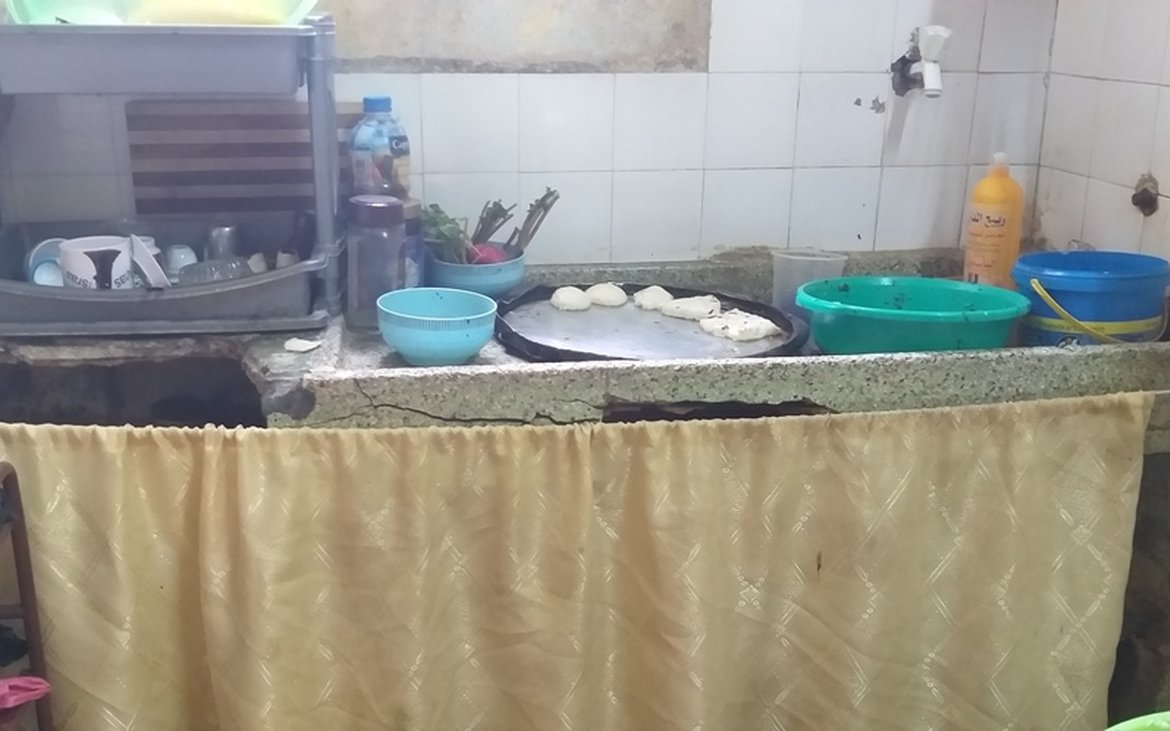
In the Old City of Nablus, a poor family consisting of a father, mother, daughter, and son lived in an old house comprising no more than two rooms and a bathroom, without a kitchen. The front courtyard of the house was exposed, and one of the rooms was not suitably equipped for sleeping.
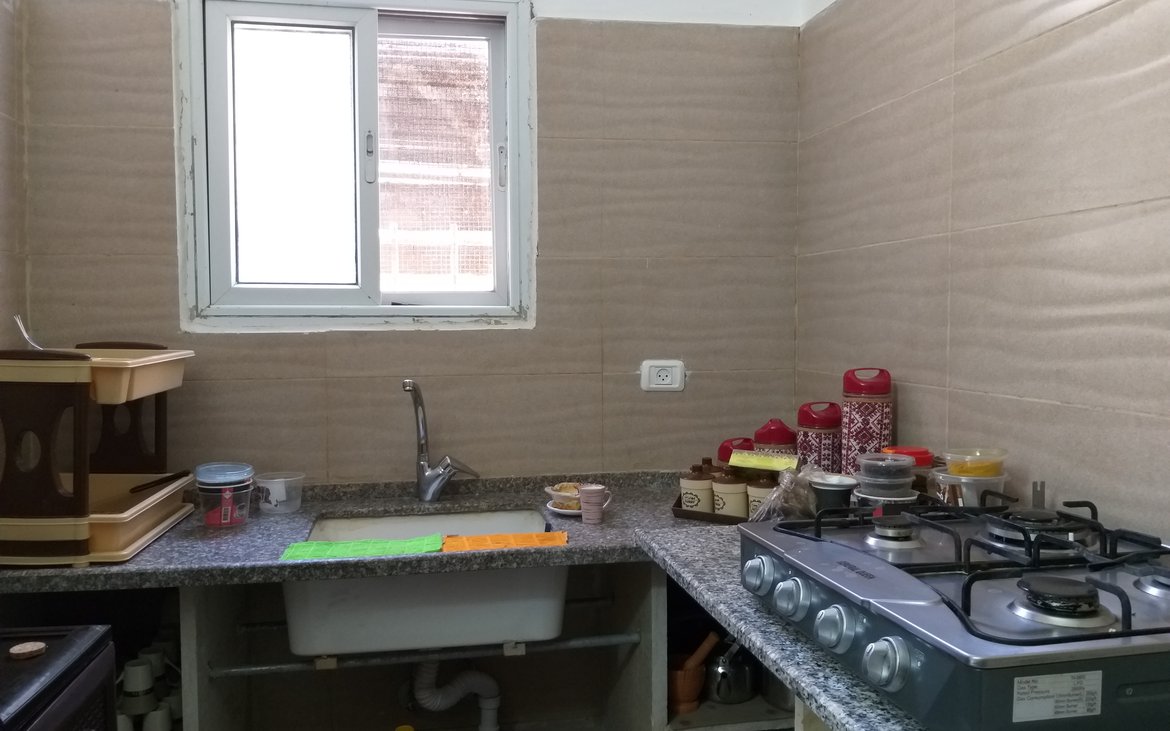
The programme, in cooperation with local entities, intervened to build a kitchen in the front courtyard and cover it with corrugated metal sheeting, in addition to tiling the second room to make it more suitable for sleeping.
For a child living in a cramped and dilapidated home, the problem may not lie solely in the appearance of the walls. The home may be associated in their memory with fear of winter, the cold, or the lack of a suitable place to sleep, study, and play. Therefore, improving the home can be a step toward restoring the child’s sense that they have a safe place to belong, which is essential for their psychological and social development.
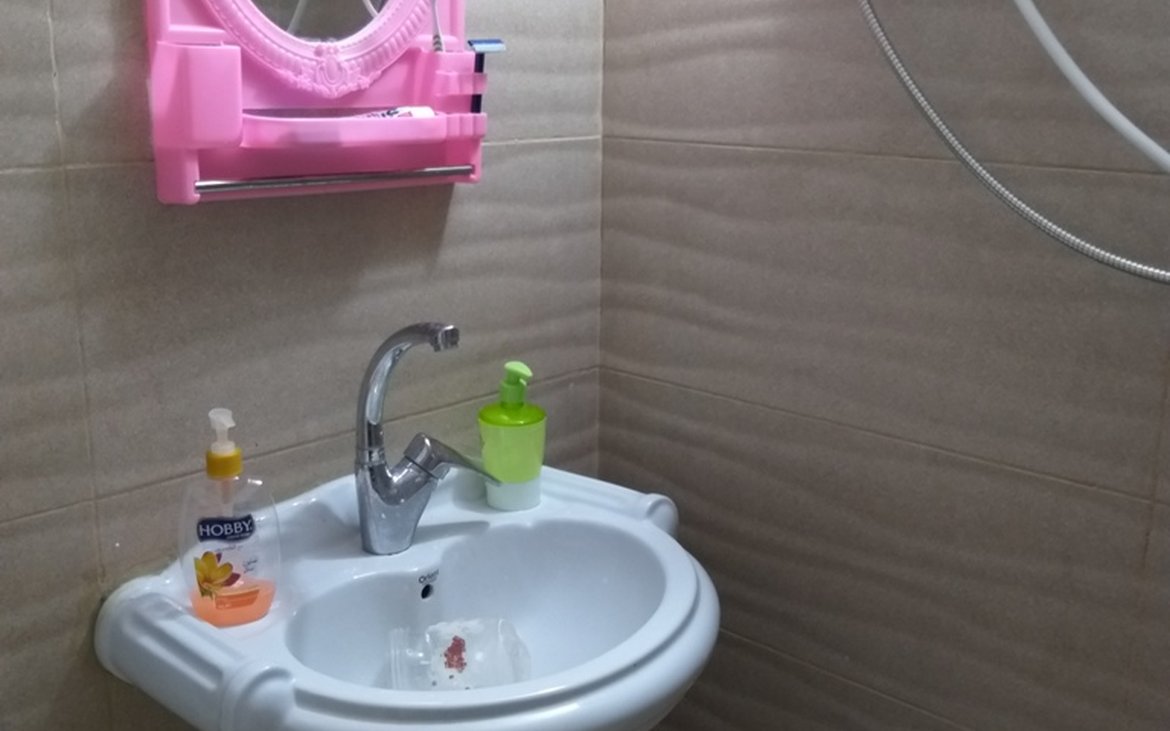
In Tulkarm Camp, the case involved an elderly couple living in a modest home lacking a kitchen and a bathroom that met even the most basic health standards. In partnership with neighborhood volunteers, the program worked to rehabilitate the bathroom, kitchen, and rooms, while the volunteer team installed a zinc roof over the home’s front courtyard.
For older people, such interventions take on added importance. Reduced physical ability to move makes an unsuitable home environment a daily burden, and can turn some simple needs into sources of fear and dependence on others. Therefore, providing a safer and more suitable environment can help older people maintain their independence and sense of dignity, and reduce the anxiety caused by difficult housing conditions.
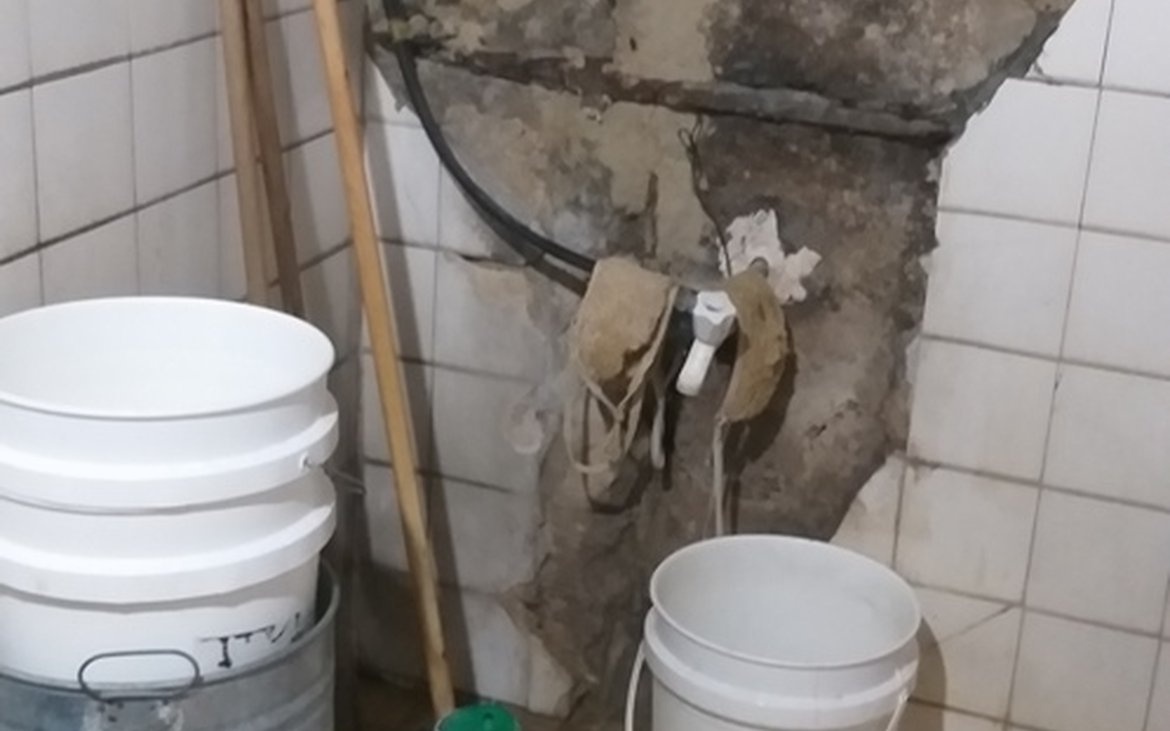
In Al-Habla Quarter in Nablus, there was a case involving an elderly woman suffering from kidney failure, living in a one-room home with its facilities, together with her three daughters and grandson. The family was facing extremely difficult living and health conditions. In partnership with local volunteer organizations and in cooperation with Nablus Municipality, the sanitary unit was rehabilitated, a small additional room was built, and the home’s plumbing was also rehabilitated.
This case encapsulates an important aspect of the program’s philosophy. When illness is part of a family’s daily life, the quality of the place where the patient lives becomes an influential factor in their psychological state. The patient needs not only treatment and medical care, but also a home environment that provides comfort and privacy, eases feelings of burden and helplessness, and gives family members space to continue caring for them with greater peace of mind.
Success stories are repeated in other cases where the program intervenes on behalf of poor and disadvantaged families by carrying out various rehabilitation works and providing engineering consultations and follow-ups for other cases. This confirms that the work does not stop at repairing material damage, but rather seeks to address the family as an integrated unit with health, psychological, social, and humanitarian needs.
The importance of these interventions is not limited to improving floors, walls, ceilings, and facilities; it extends to something deeper: rebuilding the sense of security within the family.
A child who has grown accustomed to seeing their home in poor condition may carry feelings of fear, deprivation, and embarrassment in front of their peers. An elderly person may feel that their home is no longer a safe place for them, increasing their dependence on others and their isolation. A widow who bears sole responsibility for her family may face, in addition to poverty, constant psychological pressure resulting from feeling unable to provide the household’s most basic needs. For a sick person, an unhealthy home environment may become an additional burden on top of their physical suffering.
Therefore, rehabilitating a home is fundamentally a humanitarian intervention that affects mental health as much as physical health. When a window that allowed winter rain to seep in is closed, a decent sanitary facility is installed, or a room is added to give the family some privacy, the impact is measured not only by what was repaired, but by the feelings of safety, comfort, and dignity that were restored.
A home that becomes safer gives a child the chance to sleep without fear, an elderly person room to move without anxiety, a patient more suitable conditions for recovery and care, a widow the feeling that she is not alone in facing life’s burdens, and a poor family hope that its difficult circumstances do not mean it has been forgotten or left to its fate.
The home rehabilitation program thus embodies the Community Service Center’s commitment to its developmental and humanitarian role, and its ongoing efforts to alleviate the suffering of poor and most vulnerable families and promote the right to decent housing—not merely as a material need, but as a right connected to mental and physical health and human dignity.
The program also reflects the spirit of community partnership bringing together the university, students, donors, local institutions, and volunteers, in a model affirming that real change may sometimes begin in a small space inside a modest home, yet leave a profound impact on those who live there.
Every home that was rehabilitated was not merely a completed engineering project; it was a family that regained some of its peace of mind, a child who regained a sense of security, an elderly person who regained some independence, a patient who found a more suitable environment, and a widow who felt that someone stood by her.
This aligns with the Sustainable Development Goals of combating poverty and improving quality of life, and confirms An-Najah National University’s commitment to translating its social responsibility into practical initiatives that touch people’s lives and restore to them something essential no less important than walls and a roof: hope.
عدد القراءات: 160