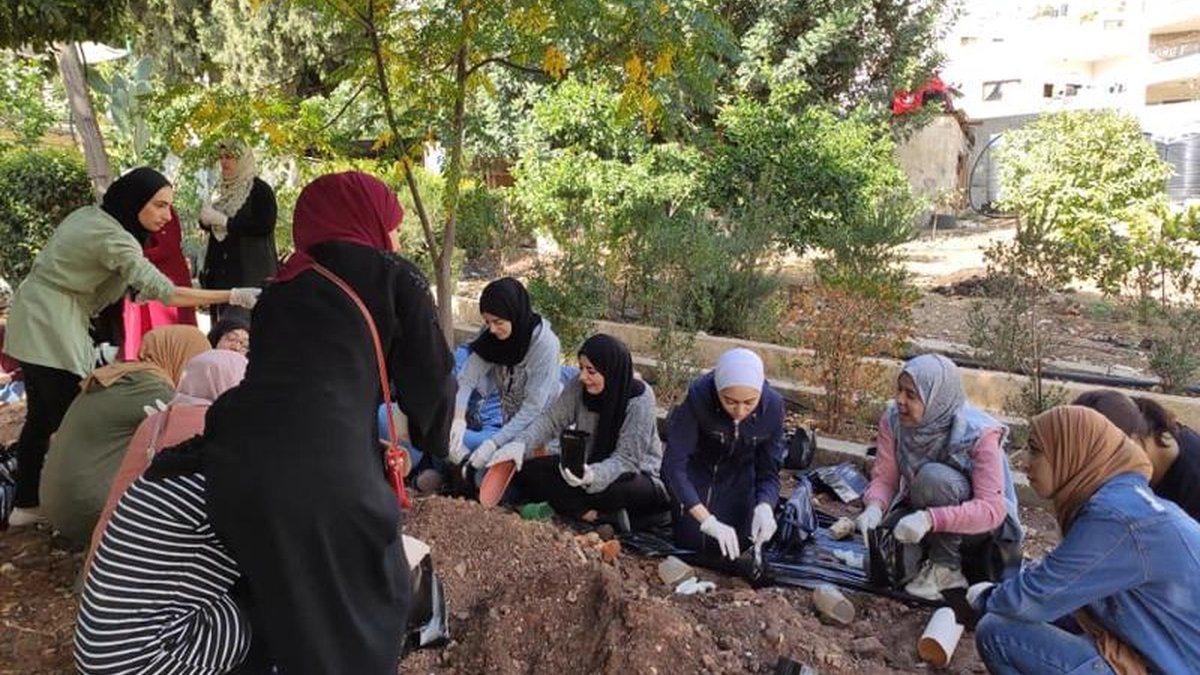
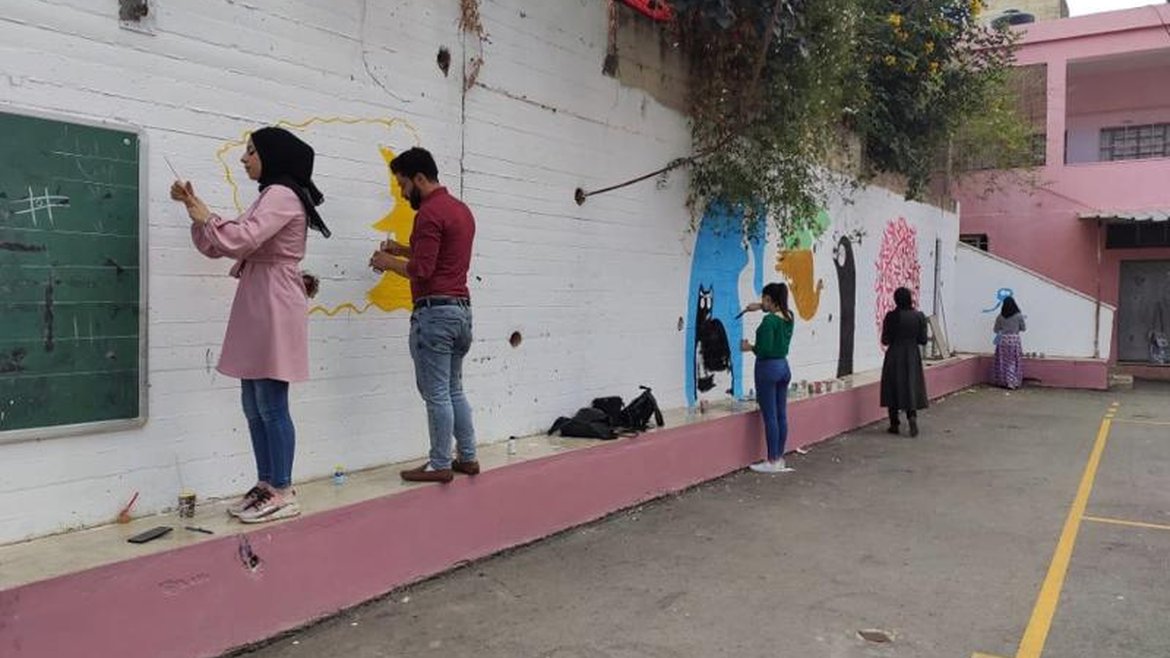
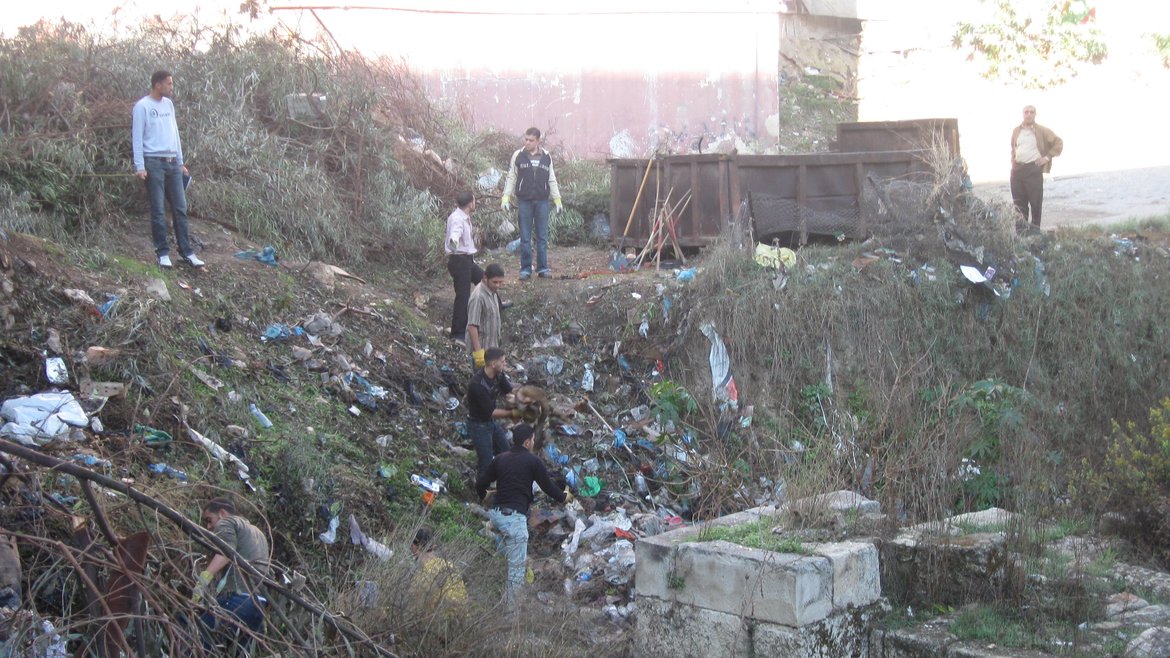
As part of the Community Service course, 1,554 university students completed more than 62,000 hours of volunteer work in various community institutions during the first semester of 2019. These efforts were distributed across a wide range of activities, including work with village and municipal councils, psychological support programs in hospitals, mural painting, planting seedlings, cleaning archaeological sites, public awareness campaigns, caring for the elderly, supporting charitable societies, and collecting donations for the rehabilitation of homes for families in need.
Fawzi Yassin, a second-year medical student, joined the Community Service course this semester and completed his volunteer hours at the Nablus Directorate of Agriculture, in addition to volunteering with nursing staff and the CSC. He expressed pride and happiness in this experience, describing it as a unique opportunity that strengthened his sense of community engagement. He explained that his work at the Directorate of Agriculture included planting seedlings and trees, noting that students were not merely recipients of education, but active contributors to greening Palestine.
Yassin also volunteered alongside nursing staff and highlighted the diversity of volunteer placements within the course. He noted that 148 students volunteered in village councils, 197 in municipal councils, ten in psychological support programs in hospitals, and 18 in painting awareness murals in schools. In addition, 604 students participated in fieldwork such as planting seedlings, cleaning archaeological sites, and public campaigns. Sixty students volunteered in health centers and clinics, 115 in charitable societies, and 250 participated in fundraising activities for housing rehabilitation, elderly care, and orphan support. This total included 953 students who donated blood, alongside other forms of volunteer participation through the CSC and partner institutions.
Maha Qazzaz, a medical student, emphasized the importance of the Community Service course, noting that it challenges students to engage directly with society through volunteering and active participation. She explained that volunteer work strengthens students’ skills and builds their capacity to interact directly with citizens and institutions. Qazzaz shared that she volunteered at the Nablus Medical Complex and the Directorate of Agriculture, describing the experience as a major personal milestone that helped her gain confidence and practical experience in working with patients and the broader community.
She added that these volunteer activities, particularly fieldwork and direct engagement with institutions, have a positive impact on students’ personalities, abilities, and professional development. Through participation in free medical days, she felt that students strengthened their professional, practical, and social roles, helping them see themselves as active members of society while still completing their studies.
Yassin also noted that his volunteer experience helped him build a strong network of social relationships with fellow students and with staff at the institutions where he volunteered. He highlighted that the experience taught him effective methods of communication with citizens and community members. He stressed that the CSC deserves significant support and greater media attention for the vital services it provides to community institutions.
Professor Bilal Salameh, Director of the CSC, reviewed the center’s role and responsibilities, as well as the wide range of volunteer services it provides through the Community Service course at An-Najah National University. He explained that the course is mandatory for all university students and counts as one credit hour. Students are required to complete 50 hours of fieldwork in community institutions after attending six theoretical lectures at the university.
Salameh explained that if a student or one of their relatives donates a unit of blood, ten hours are deducted from the required volunteer hours, reducing the total to 40 hours. He emphasized that this policy reflects humanitarian values and encourages students to participate in blood donation, highlighting its health benefits for donors and its critical role in saving lives in cases such as traffic accidents, surgeries, thalassemia, and kidney dialysis.
Through this course, the Community Service Unit contributes to promoting the values of volunteerism, attracting and training volunteers for the CSC’s various programs, and supplying community institutions with skilled and committed volunteers.
The CSC was established at An-Najah National University in 1999 in cooperation with McGill University in Canada. It provides community services based on professional social work principles rooted in human rights. The CSC operates as a community-based organization affiliated with the university and embedded in the local community, relying primarily on the voluntary efforts of university students and community members.
Through its programs, the CSC aims to help local communities organize themselves and actively participate in addressing social challenges, particularly those affecting marginalized individuals and groups. It works to empower beneficiaries to become self-reliant while respecting human rights in both its methods and outcomes.
The CSC designs and implements community programs based on local needs, guided by principles of respect, protection, and promotion of human rights. It also serves as a model for cooperation between Palestinian universities and local communities, reflecting the university’s philosophy and vision of community engagement. Through partnerships and coordination, the CSC contributes to developing professional community work practices, spreading a culture of volunteerism, and providing practical and theoretical training opportunities for university students, particularly those in the humanities.
عدد القراءات: 158