
Twenty students from the Community Service course participated in an introductory and promotional march highlighting the historical, heritage, and religious landmarks of the town of Sebastia. The activity was organized in cooperation with the Palestinian Olympic Committee and the Municipality of Sebastia, with the aim of encouraging students and citizens to engage in domestic tourism through institutional partnership.
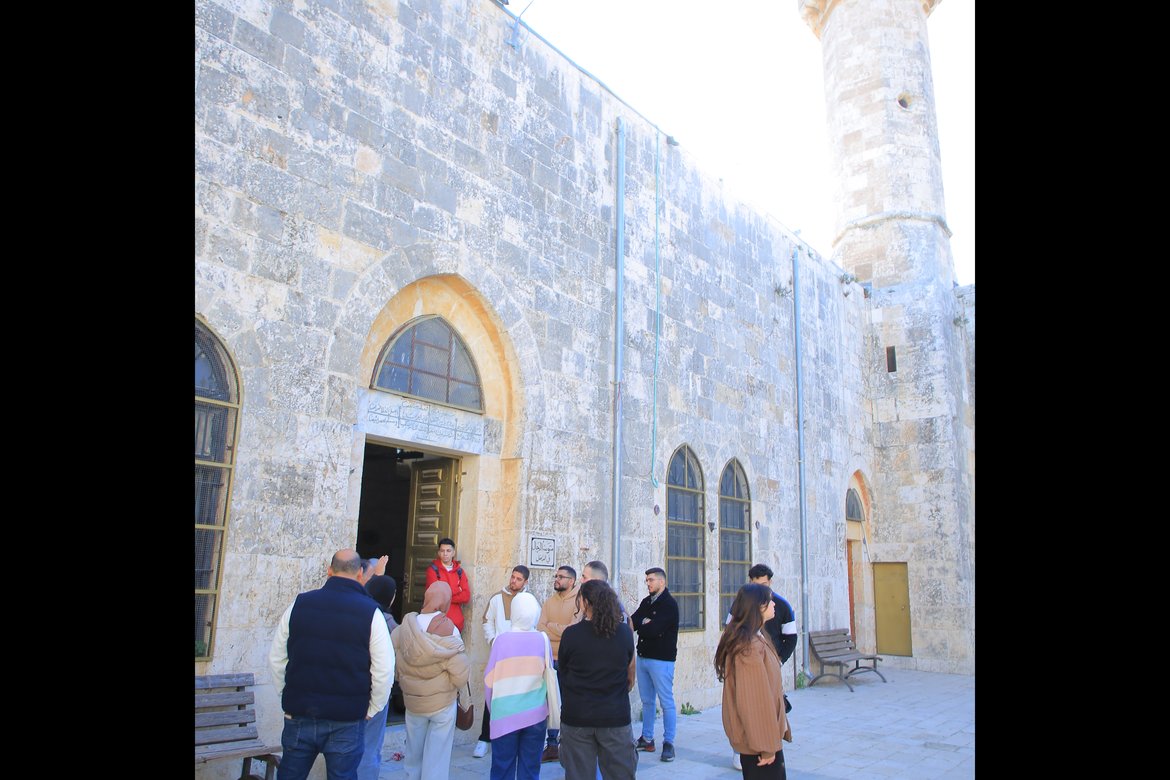
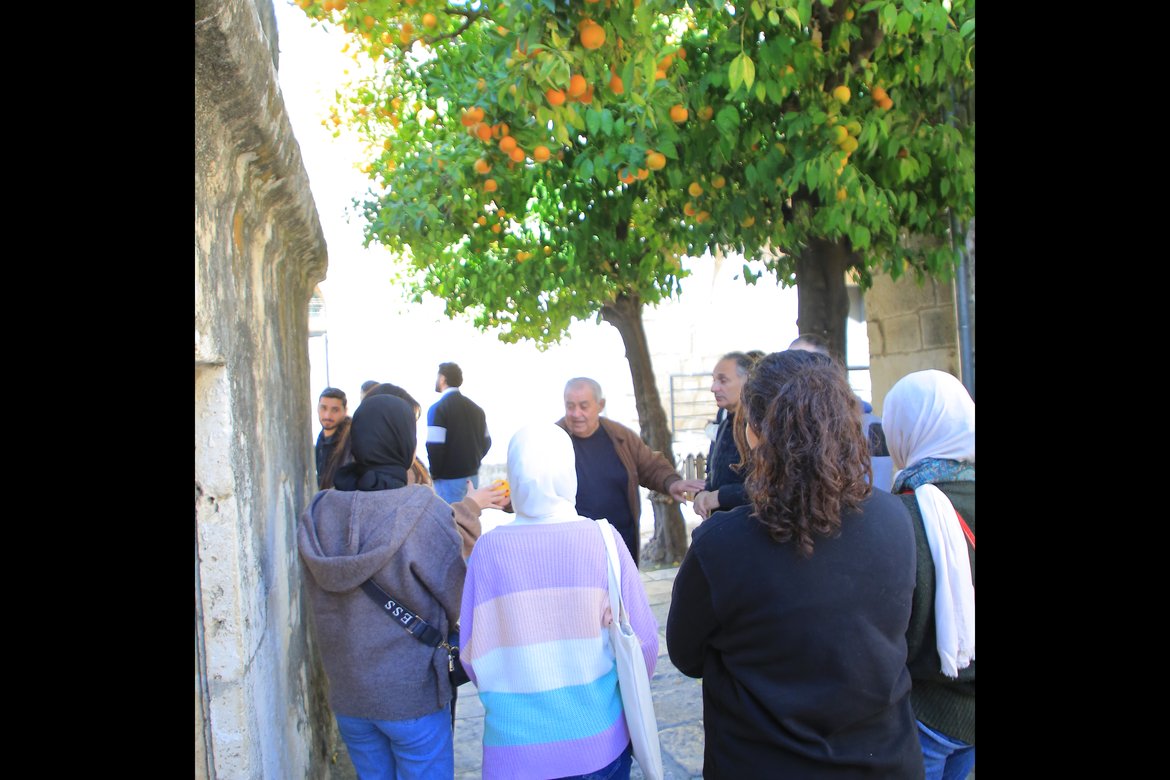
The activity began with a guided tour of Sebastia’s archaeological sites, including a visit to the historic Ottoman mosque, one of the town’s most prominent religious and historical landmarks. Built by the leader Salah al-Din al-Ayyubi on the ruins of a Crusader cathedral, the mosque houses the shrine of Prophet Yahya, peace be upon him, along with a tomb and an underground rock tunnel. This makes it an important site for religious and historical pilgrimage.
The events continued at the Sebastia Municipality Hall, where the Mayor of Sebastia, Mr. Mohammed Azem, welcomed the participants and expressed his appreciation for this national initiative, which reflects the spirit of solidarity and support for the town and its residents. Major General Rifaat Kalab, Secretary-General of the Palestinian Olympic Committee, also delivered a speech praising the role of partner institutions in supporting rural communities. At the conclusion of the speeches, participating institutions were honored. Commemorative shields were presented to the Municipality of Sebastia and to the Community Service Center at An-Najah National University. The shield awarded to the Center was received by its Director, Mr. Alaa Abu Duheir.
Following this, the event proceeded to Sebastia Vocational School, where students were honored on the school’s football training field. Medals provided by the Palestinian Olympic Committee were distributed to the students in a step aimed at boosting morale and strengthening their connection to national identity.
The activities also included an educational route to the archaeological Columns Square in Sebastia, where students learned about its historical significance as a central part of the Roman city dating back to the second century AD. The site once served as an important commercial and social center and is distinguished by its stone columns. The route continued with a visit to the Roman amphitheater, which also dates back to the second century AD, during the era of the Roman Emperor Septimius Severus. The activities concluded with the planting of olive trees around the Roman amphitheater.
The activity received significant engagement from the participating students, many of whom were visiting Sebastia and its historical landmarks for the first time. This experience contributed to raising their awareness and strengthening their sense of social responsibility. The students expressed their happiness and gratitude to the Community Service Center for providing them with the opportunity to take part in this event.
This activity comes within the framework of the Community Service Center at An-Najah National University’s commitment to strengthening partnerships and community networking, implementing joint initiatives that serve the community, facilitating the exchange of experiences, and enhancing students’ cultural awareness.




عدد القراءات: 28