
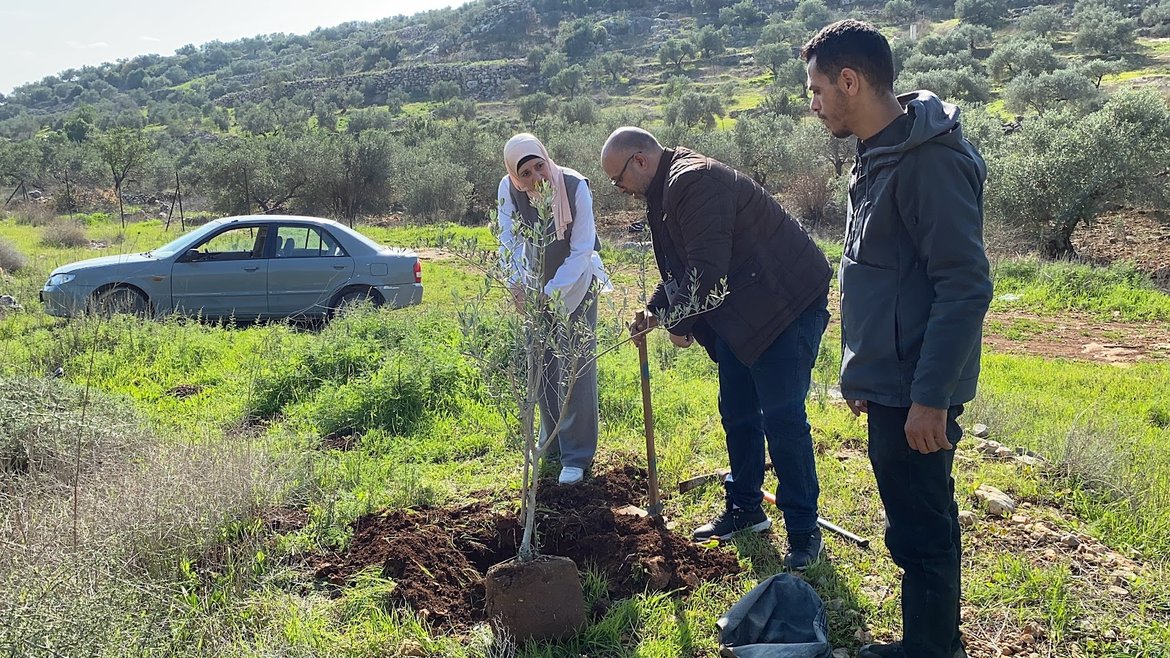
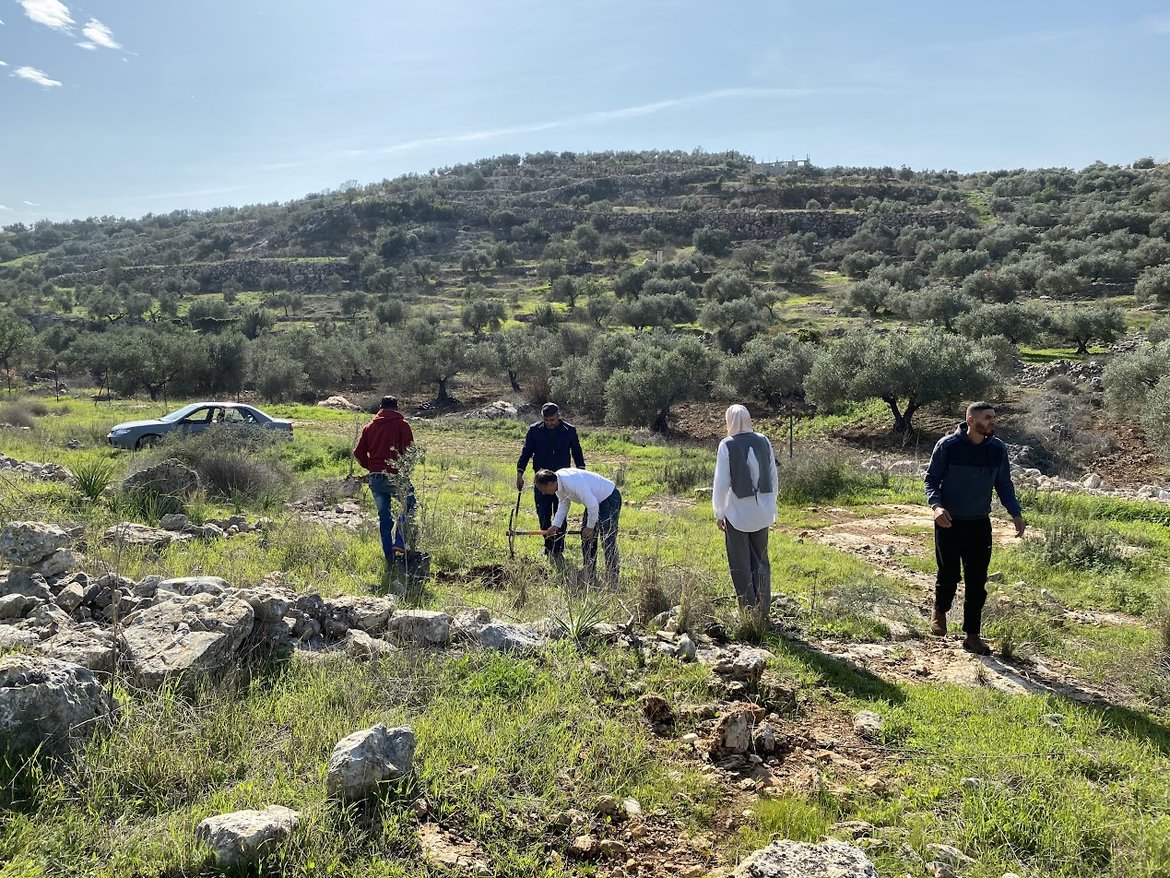
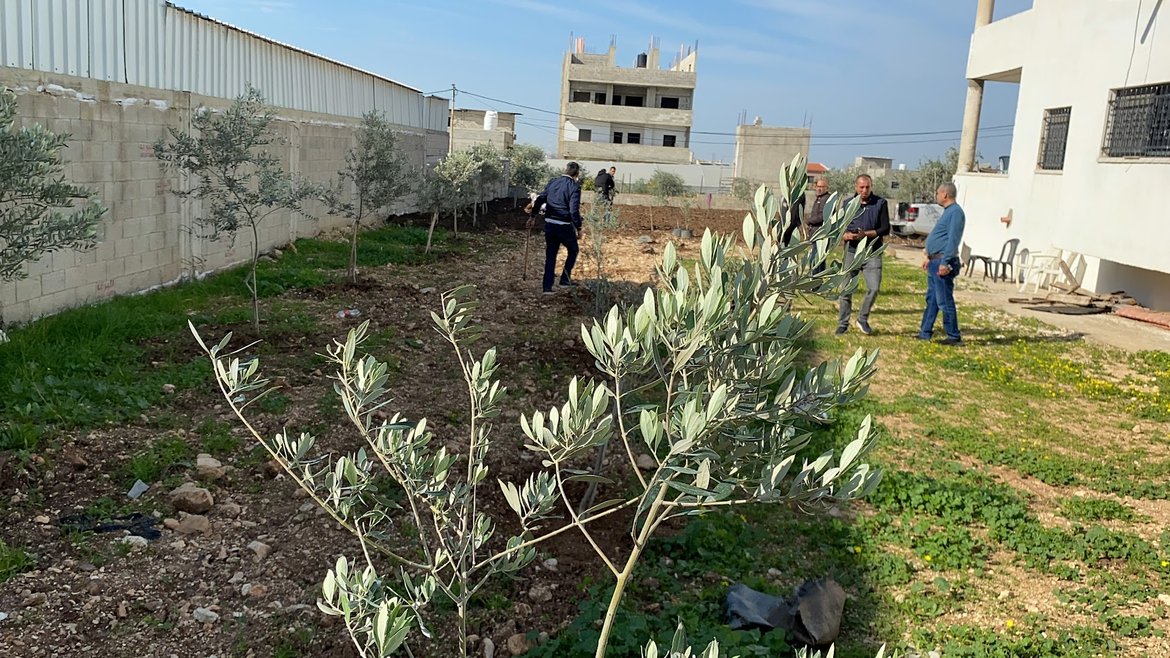
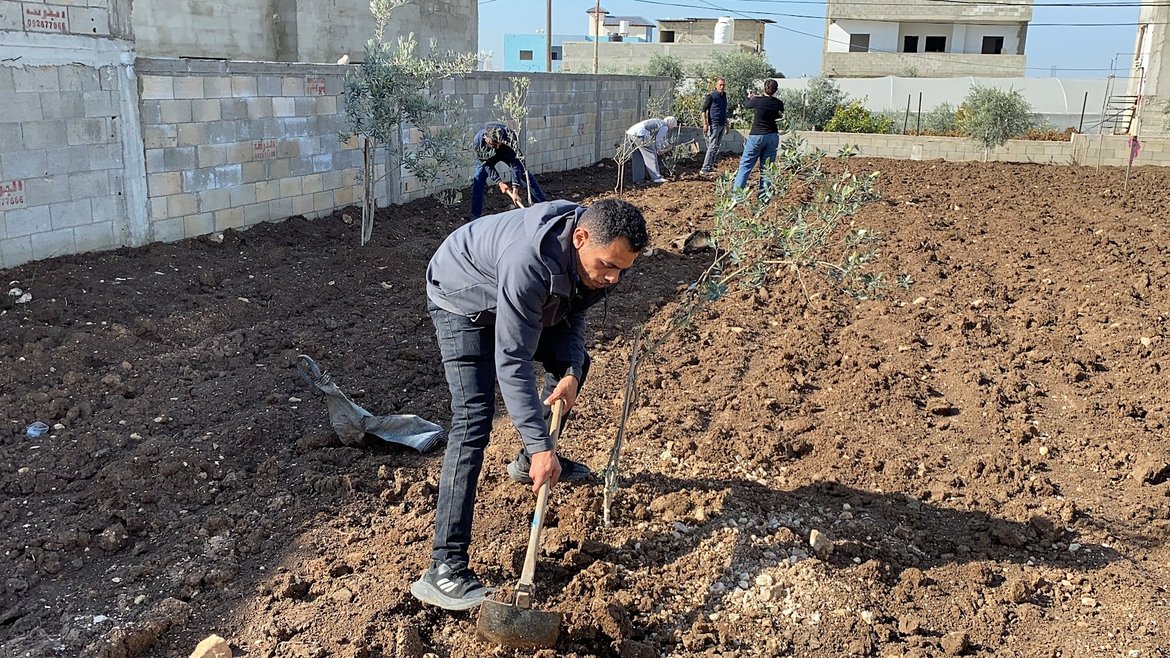
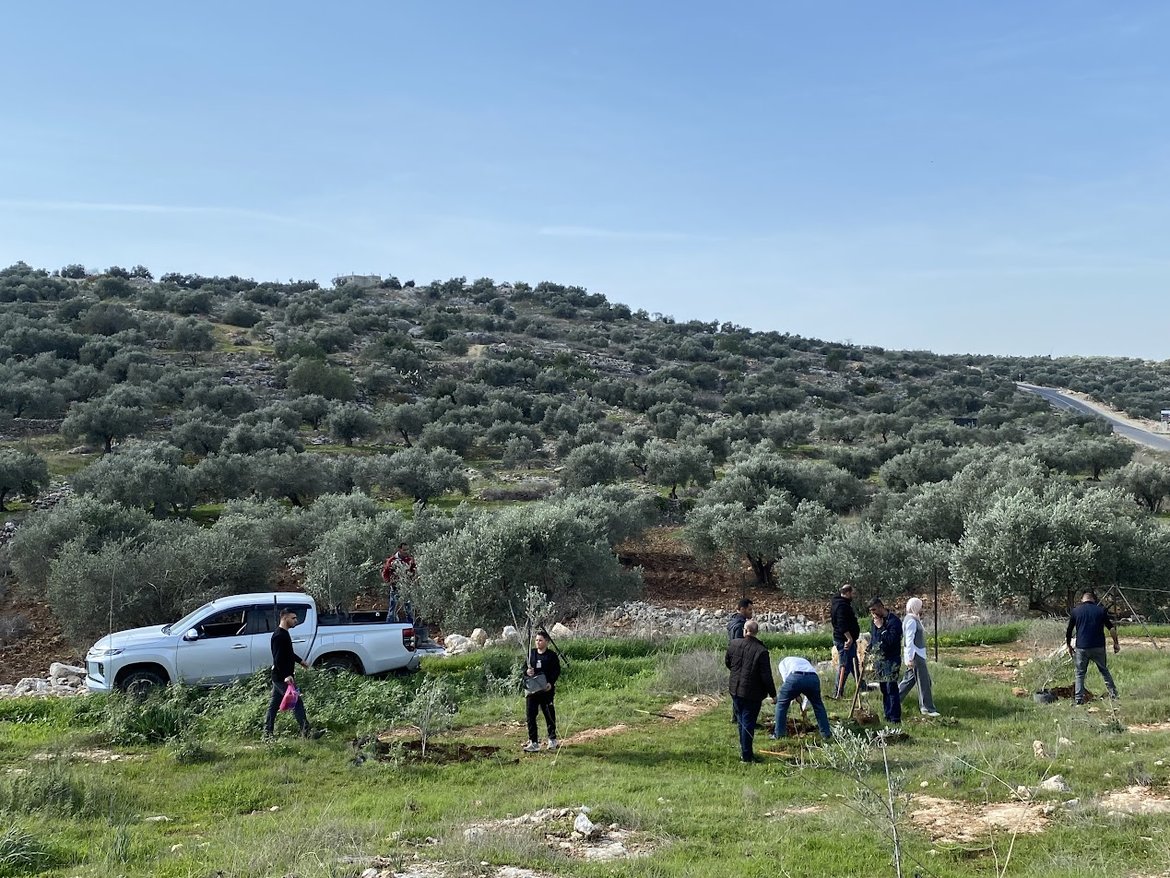
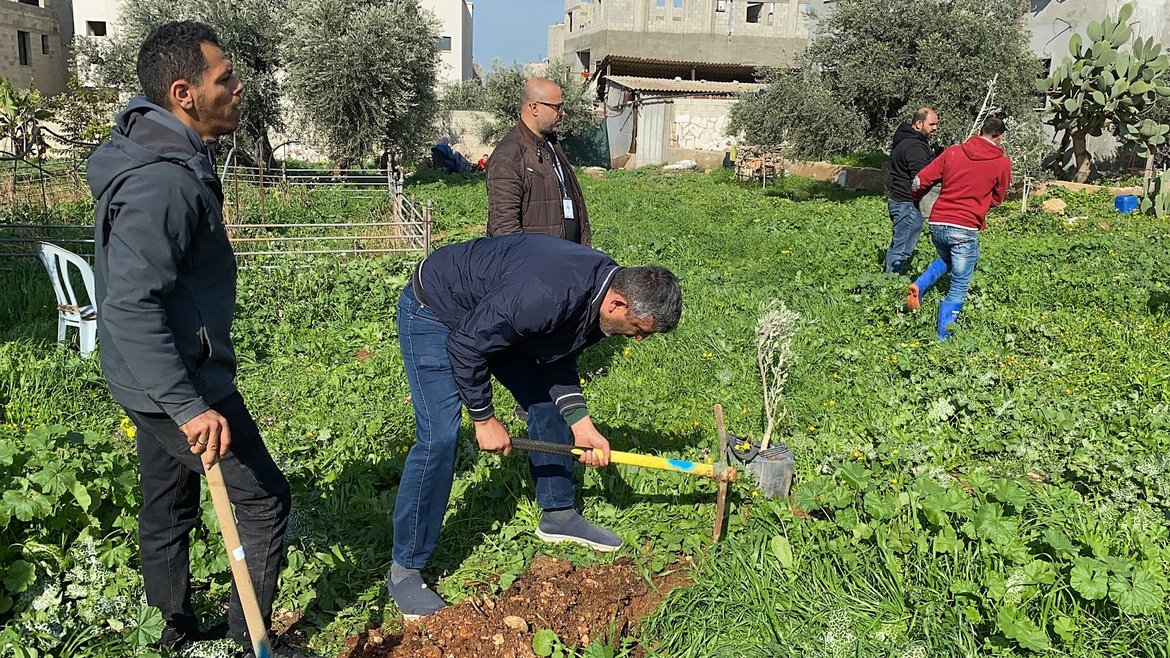
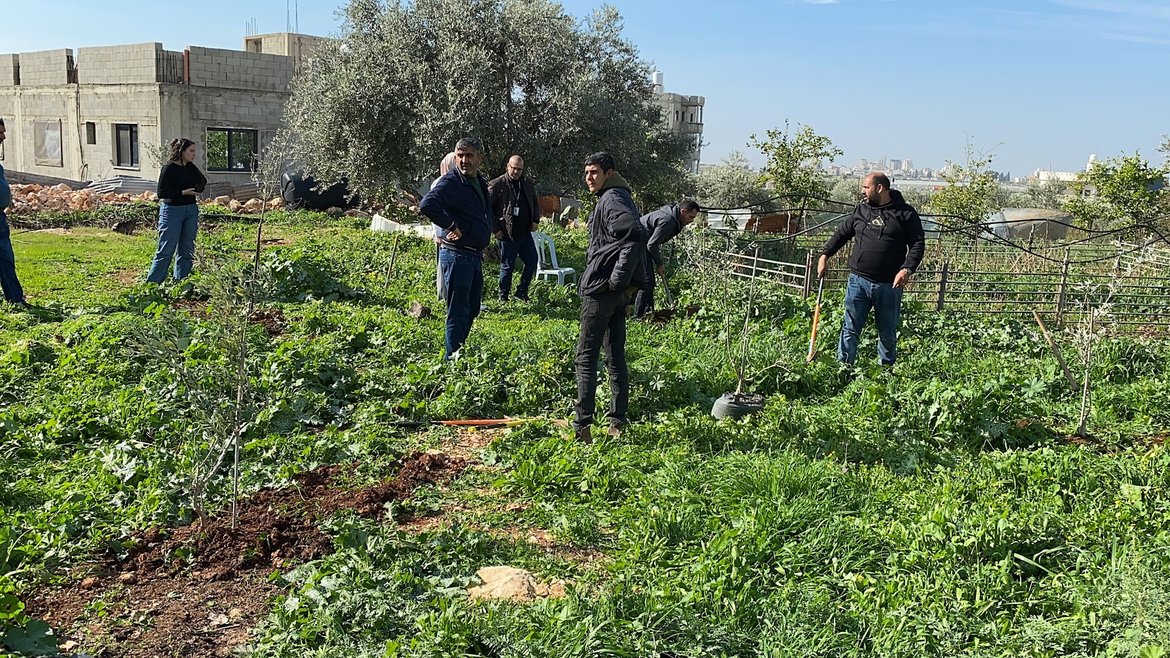
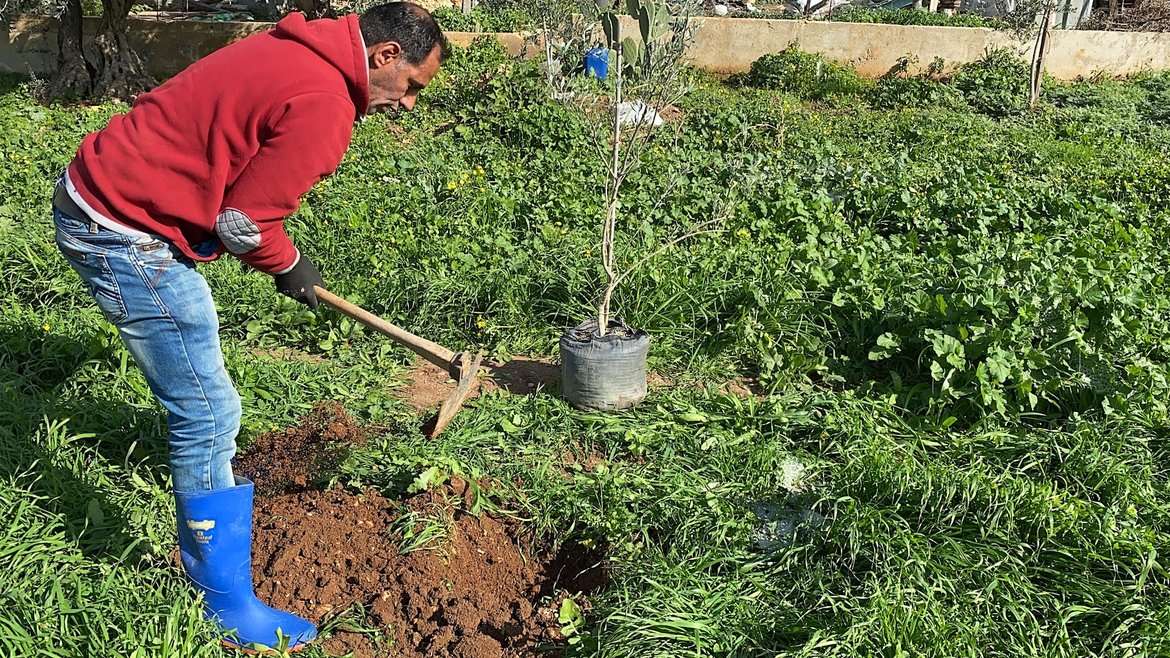
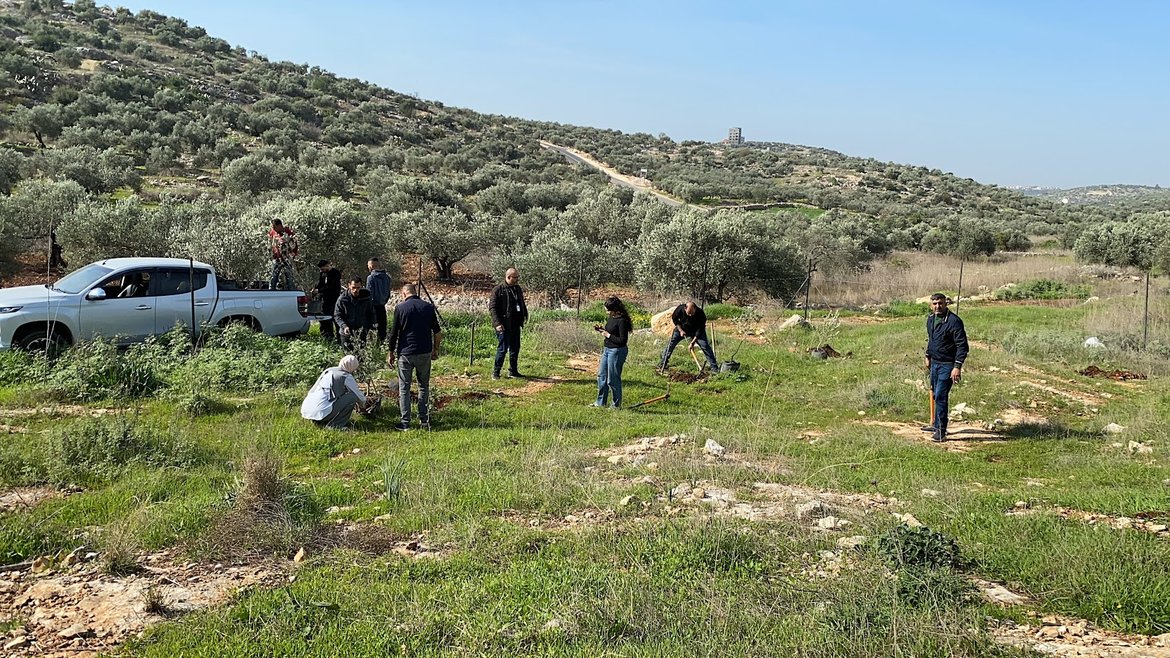
The Faculty of Veterinary Medicine and Agricultural Engineering, together with the CSC at An-Najah National University, implemented an agricultural initiative to support four needy families in the rural villages of Dhanaba and Iktaba in the Tulkarm Governorate. The project involved planting 52 olive seedlings around homes and home gardens.
The initiative aims to provide a future source of income that can help improve the living conditions of beneficiary families. It reflects the university’s commitment to the principles of sustainable development and the promotion of self-reliance.
This activity is part of a series of small income-generating projects implemented by the university, based on its belief in the importance of agriculture as a tool to enhance economic and social conditions, support family resilience on their own land, and reduce dependence on external aid.
The CSC expressed its gratitude to the Na’alwa Nursery in Tulkarm for contributing the seedlings as part of its social responsibility. The project targeted families facing difficult economic, psychological, and social conditions due to displacement, focusing particularly on the elderly, people with disabilities, the sick, and the unemployed.
The CSC explained that planting around homes was carefully chosen to ensure easy access to water and allow daily monitoring of the seedlings for irrigation, fertilization, and pruning, which increases the likelihood of the project’s success and sustainability.
The CSC emphasized that this initiative is based on a firm belief in the ability of individuals to improve their circumstances when provided with the proper resources and support. The project also aligns with An-Najah National University’s afforestation campaign, in which the CSC participates, with a focus on planting fruit trees that have economic value.
عدد القراءات: 43